
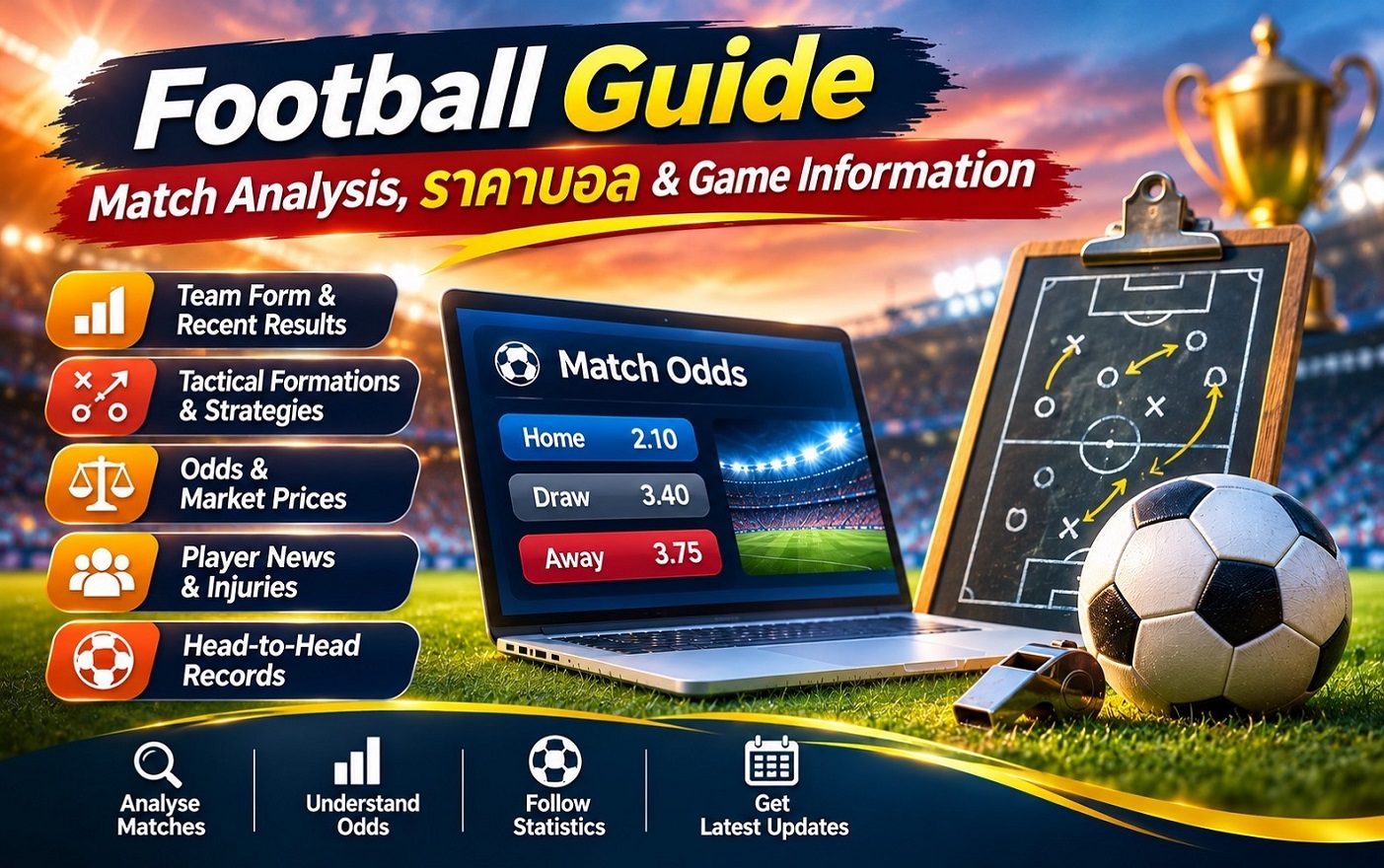
Understanding Football Markets and Match Information
Football attracts a worldwide audience interested in competitions, team performances, player statistics, and match developments. Understanding the sport involves examining more than final scores because tactical decisions, player availability, and recent performances all influence how matches unfold. Readers researching ราคาบอล will encounter terminology connected with football markets, match prices, statistical assessments, and probability estimates. Understanding these terms in context helps readers distinguish numerical information from predictions and editorial opinions.
Football information is published across league websites, club announcements, sports publications, and statistical platforms. These sources provide details about fixtures, standings, previous results, team news, and individual performances. However, information can become outdated quickly, particularly when teams announce injuries or make last-minute lineup changes. Checking publication dates and comparing reliable sources helps readers develop a more accurate understanding of each competition.
The Role of Recent Team Form
Recent team form is an important element of football analysis because it provides insight into how clubs have performed across their latest fixtures. Analysts often examine victories, draws, defeats, goals scored, goals conceded, and the overall quality of performances. A sequence of positive results may indicate consistency, but it does not automatically establish that a team will perform equally well in its next match. The strength of previous opponents and competition conditions should also be considered.
Home and away performances can reveal additional differences between teams. Some clubs create more scoring opportunities in familiar stadiums, while others maintain strong defensive organisation when playing away. Travel schedules, recovery periods, weather conditions, and fixture congestion may also affect performance. Reviewing these factors together provides a more balanced picture than relying on a team’s league position or its most recent result alone.
Understanding Football Odds and Probability
Football odds are numerical values used in sports markets to represent prices associated with different possible outcomes. They are commonly displayed in decimal, fractional, or American formats, depending on the region and platform. Understanding these formats helps readers interpret sports-market information and recognise how numerical prices are presented. However, odds are not guarantees and should not be confused with the actual outcome of a football match.
Decimal odds can be converted into an implied probability using a basic mathematical calculation. Dividing one by the decimal odds produces an implied probability before accounting for market margins. For example, decimal odds of 2.00 correspond to an implied probability of 50 percent under this calculation. Actual market prices may incorporate bookmaker margins and other factors, so the displayed probability should not be treated as an objective measurement of what will happen.
How ราคาบอล Terminology Is Used in Football Coverage
The term ราคาบอล is commonly encountered in Thai-language football-market discussions and refers to football odds or prices. Its meaning can vary according to the market format and the context in which it appears. Readers may encounter related terminology when reviewing match previews, market comparisons, handicap explanations, or sports information. Understanding the terminology is useful for interpreting articles without assuming that a displayed price represents a certain result.
Football markets may present information using different formats, including match-result prices and handicap-related terminology. These formats describe different ways of representing possible outcomes and should not be confused with ordinary match statistics. Readers should pay attention to definitions, market rules, and the time at which information was published. A clear understanding of terminology helps prevent confusion when comparing information from different football platforms.
Tactical Formations and Playing Styles
Tactical formations explain how football players are positioned across the pitch and how teams organise their attacking and defensive responsibilities. Common formations include 4-3-3, 4-4-2, 3-5-2, and 4-2-3-1. Each system provides different possibilities for controlling midfield areas, creating attacking opportunities, and protecting defensive spaces. However, a formation alone cannot explain a team’s complete playing style because movement, pressing, and player instructions are equally important.
Some managers prefer possession-based football, using controlled passing and coordinated movement to create opportunities. Other teams focus on defensive organisation before launching quick counterattacks when possession is recovered. High pressing attempts to disrupt opponents close to their defensive areas, while compact defensive systems reduce available space. Understanding these approaches helps readers recognise how tactical decisions influence the pace and structure of a match.
Player Statistics, Injuries and Team Selection
Individual player performances can have a significant influence on the overall strength of a football team. Important statistical indicators include goals, assists, successful passes, interceptions, tackles, chances created, and minutes played. These measurements should be interpreted according to each player’s position and responsibilities. For example, a central defender and an attacking midfielder contribute to their teams in different ways, making direct statistical comparisons less meaningful.
Injury reports and suspension announcements provide additional information about team selection. When important players are unavailable, managers may need to change their formations or introduce alternative options. Recovery periods, training participation, and demanding competition schedules can also influence player availability. Readers should check official club announcements and reliable sports reporting rather than relying on unverified social media updates.
Head-to-Head Records and Historical Performance
Head-to-head records provide historical information about previous meetings between football clubs. These records may include match results, goals scored, competition details, and home or away performances. Reviewing previous encounters can help readers understand the history of a rivalry and identify patterns worth examining. However, historical results should not be treated as reliable predictions because teams, managers, and playing systems frequently change.
Recent meetings may offer more relevant context than matches played many seasons earlier. Even so, analysts should consider whether the current squads and tactical approaches resemble those involved in previous fixtures. Competition importance, player availability, and managerial changes can create very different circumstances. Historical records are most useful when considered alongside current team form and other reliable performance information.
Reading Football Statistics and Market Prices Responsibly
Football statistics and market prices describe different aspects of the sport. Statistics provide information about measurable events, such as possession, shots, passing accuracy, and goals, while market prices represent numerical values associated with possible outcomes. The term ราคาบอล may appear alongside these measurements in football coverage, but the two types of information should not be treated as interchangeable. A team’s statistical performance does not establish that a particular market price is accurate.
Readers should also understand that statistical averages can hide important details. A team might have high possession but create relatively few clear scoring opportunities, while another may generate dangerous attacks through fewer passes. Similarly, market prices can change as new information becomes available. Evaluating the date, source, methodology, and context of each figure helps readers interpret football information more carefully.
Finding Reliable Football Information Online
Online football platforms provide access to fixtures, standings, player profiles, match statistics, competition updates, and editorial analysis. Reliable information is particularly important when following several leagues or international tournaments simultaneously. Official competition websites and club announcements are useful sources for confirmed information, while established sports publications can provide additional context. Readers should compare information when reports appear inconsistent or when an important update has not been officially confirmed.
Balltory offers a football-focused destination for readers exploring football-related information and market terminology. When reviewing topics involving ราคาบอล, readers should distinguish factual reporting from predictions, promotional statements, and changing market information. It is also important to recognise that no website or statistical model can remove the uncertainty associated with football results. Careful evaluation of sources supports a more informed understanding of the sport.
Developing a Deeper Understanding of Modern Football
Football analysis becomes more meaningful when readers examine team form, player contributions, tactical systems, historical records, and statistical information together. Looking beyond final scores can explain why some teams control possession, create more opportunities, or experience defensive difficulties. Understanding competition formats and the circumstances surrounding individual matches also provides useful context. These perspectives help readers appreciate the strategic and statistical dimensions of modern football.
The availability of online sports information makes it easier to follow competitions and understand different aspects of the game. Nevertheless, readers should distinguish verified facts from estimates and recognise that numerical information cannot explain every unpredictable event. Reviewing reliable match reports, team announcements, tactical observations, and statistical evidence encourages a more balanced perspective. A strong understanding of football comes from examining evidence carefully and appreciating the many factors that shape every match.